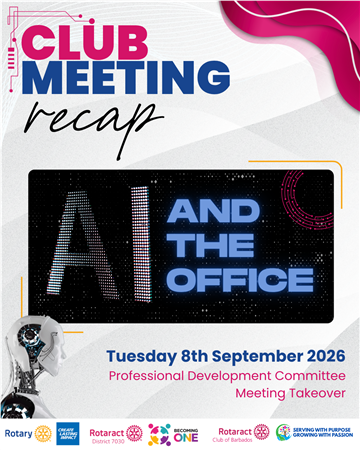
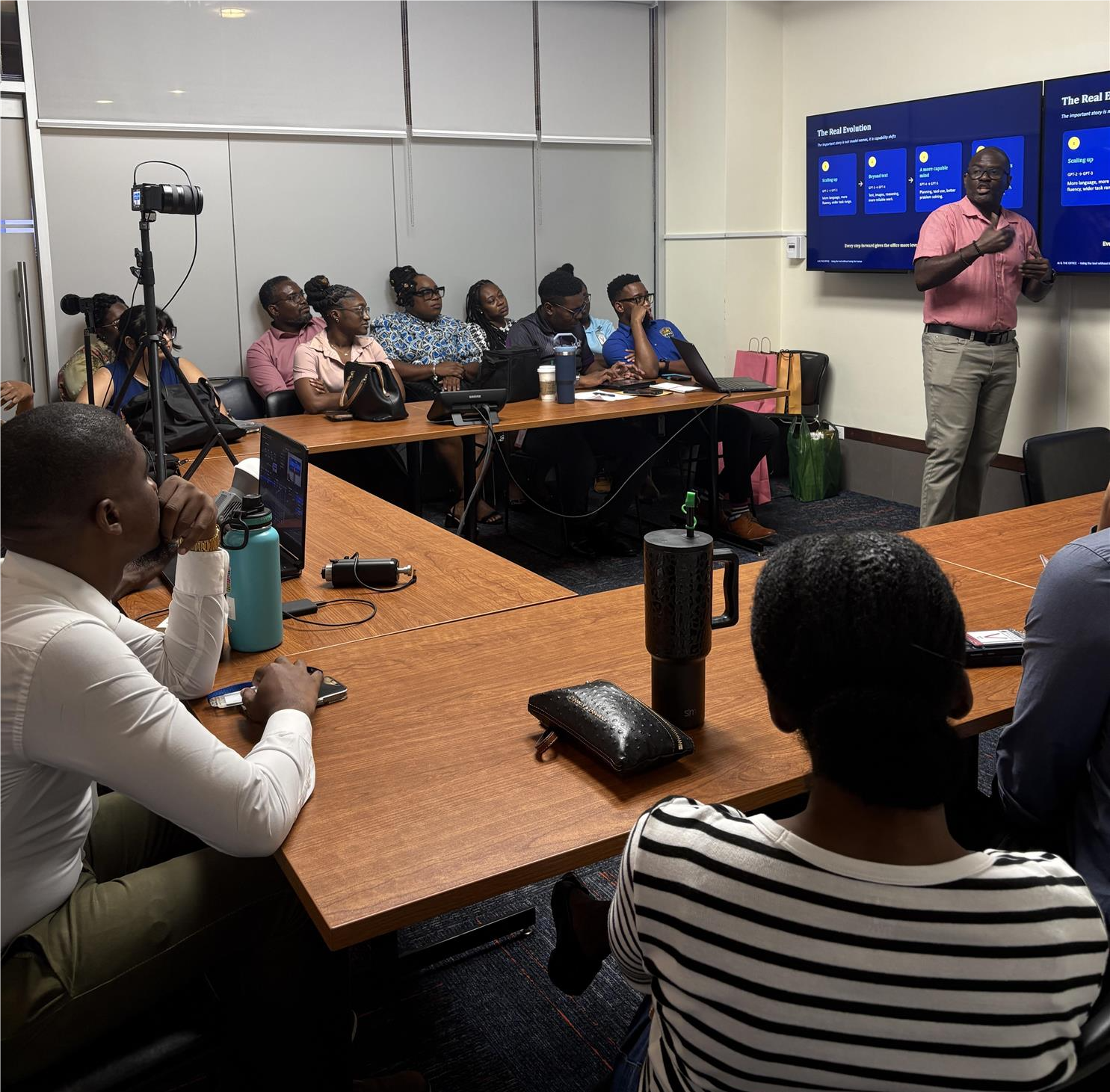
As Artificial Intelligence reshapes the workplace, young professionals are faced with new questions about their skills, careers and future. Through AI and the Office, the Rotaract Club of Barbados brought together approximately 30 young professionals from diverse fields to explore AI’s practical applications, limitations and implications for the future of work. The session encouraged participants to move beyond uncertainty and consider how they can adapt, remain relevant and embrace new possibilities in an evolving professional landscape.
You have worked hard to get here. You have studied, developed your skills and started building a career. You are learning what it takes to succeed in your field, gaining experience and beginning to find your footing. Then the workplace starts changing in ways you may not have anticipated. Artificial Intelligence (AI) can now assist with tasks that once required hours of work, generate ideas in seconds and perform functions that would have seemed improbable just a few years ago. As its capabilities expand, so do the questions facing those preparing to build their careers. What will employers expect of us? Which skills remain valuable? And how do we make room for new technology without losing sight of the human abilities that make us good at what we do?
For young professionals in Barbados, understanding these changes is becoming an important part of preparing for the future. Yet, it is difficult to make informed decisions about a technology you have not had the opportunity to explore, especially when much of the conversation around it swings between excitement and fear. The Rotaract Club of Barbados recognised an opportunity to help bridge that gap. Through our Professional Development Committee, the Club introduced AI and the Office, giving young professionals the chance to look beyond the headlines and consider what AI could mean for their working lives.
The aim was not to present AI as a threat to overcome or a solution to embrace without question. Instead, the Committee wanted members to understand its practical applications, recognise its limitations and learn how to engage with it safely and responsibly. As Club Vice President and Committee Chair Leah Browne explained, the goal was for participants to feel “more informed, confident, and prepared to navigate AI, rather than intimidated or left behind by its rapid advancement.”
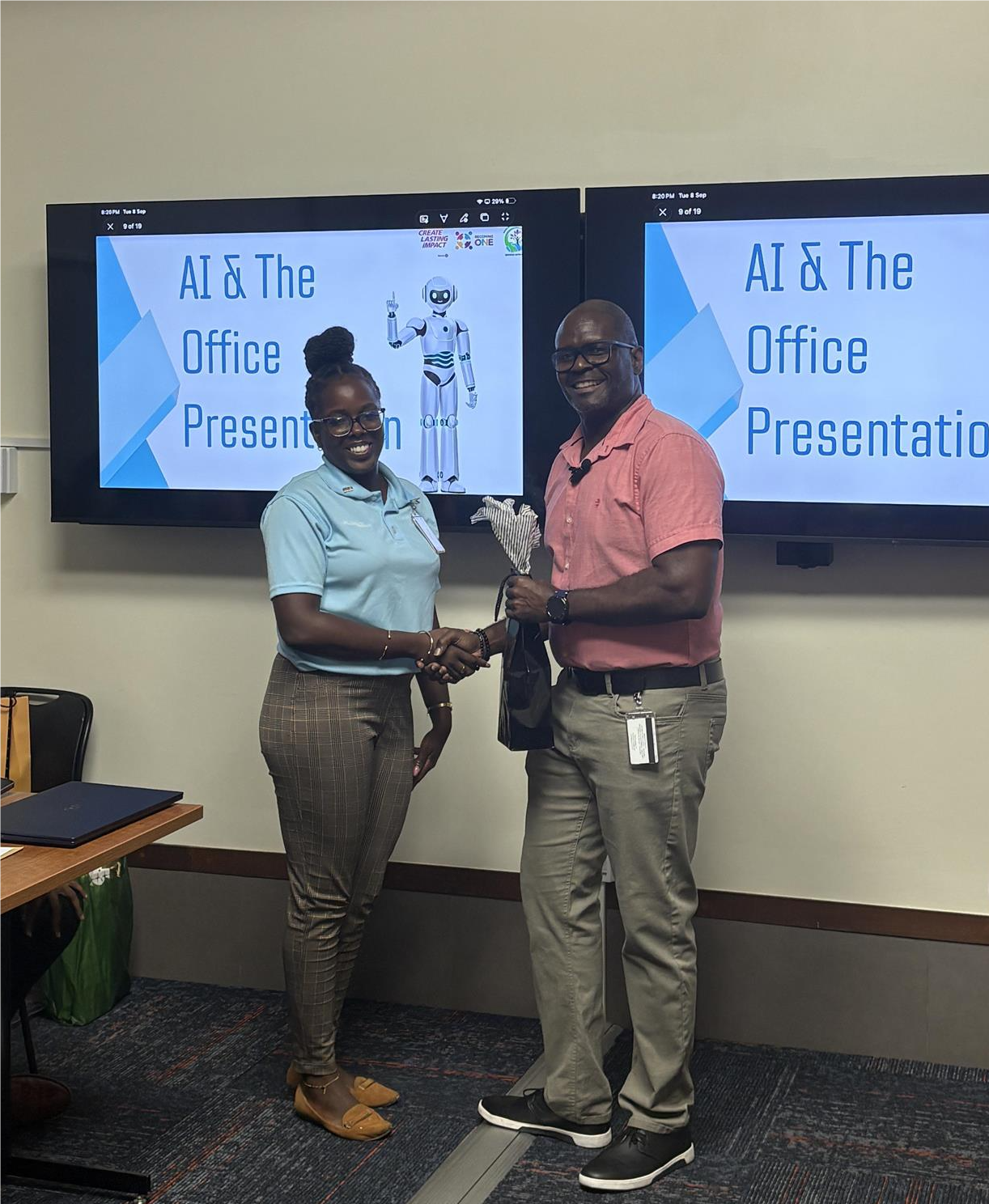
Facilitated by Barbadian technology executive, data privacy and cybersecurity advisor, Steven A. Williams, the session helped attendees understand AI and how young professionals can remain valuable as the nature of work evolves due to AI. Steven believes the answer lies partly in being able to adapt. Some roles will change as organisations incorporate AI, but the ability to learn, exercise judgement and apply technology meaningfully will remain important. He explained that “career fluidity will increasingly become a form of job security.”
For the Club’s Assistant Director of Finance and Fundraising Nickyle Holder, this conversation challenged an existing concern about AI’s growing presence in the workplace. “Honestly, I was relatively weary about AI becoming so prominent in the workplace,” he shared. However, what stayed with him was the realisation that using AI does not mean giving up on the abilities he worked hard to develop.
Committee Secretary Melodi Harewood came to the session from a different starting point. Having rarely used AI, she had not given much thought to how far the technology might develop or how it could influence her professional future. Afterwards, she found herself looking at it with greater curiosity and considering how it might complement her own abilities. “Personally, I left the session feeling more curious about AI than I was before,” Melodi reflected.
Their experiences reveal why conversations about AI are becoming increasingly important, particularly for young professionals who are still building their careers and determining how best to navigate a changing working environment.
The presence of approximately thirty (30) attendees from education, finance, construction, entertainment, medicine and many other fields, further illustrated that this is not a conversation limited to those in technology. AI has the potential to influence how people work, solve problems and approach their responsibilities across a wide range of professions.
View the full presentation on our YouTube channel.